
19th century Blue John egg pendant
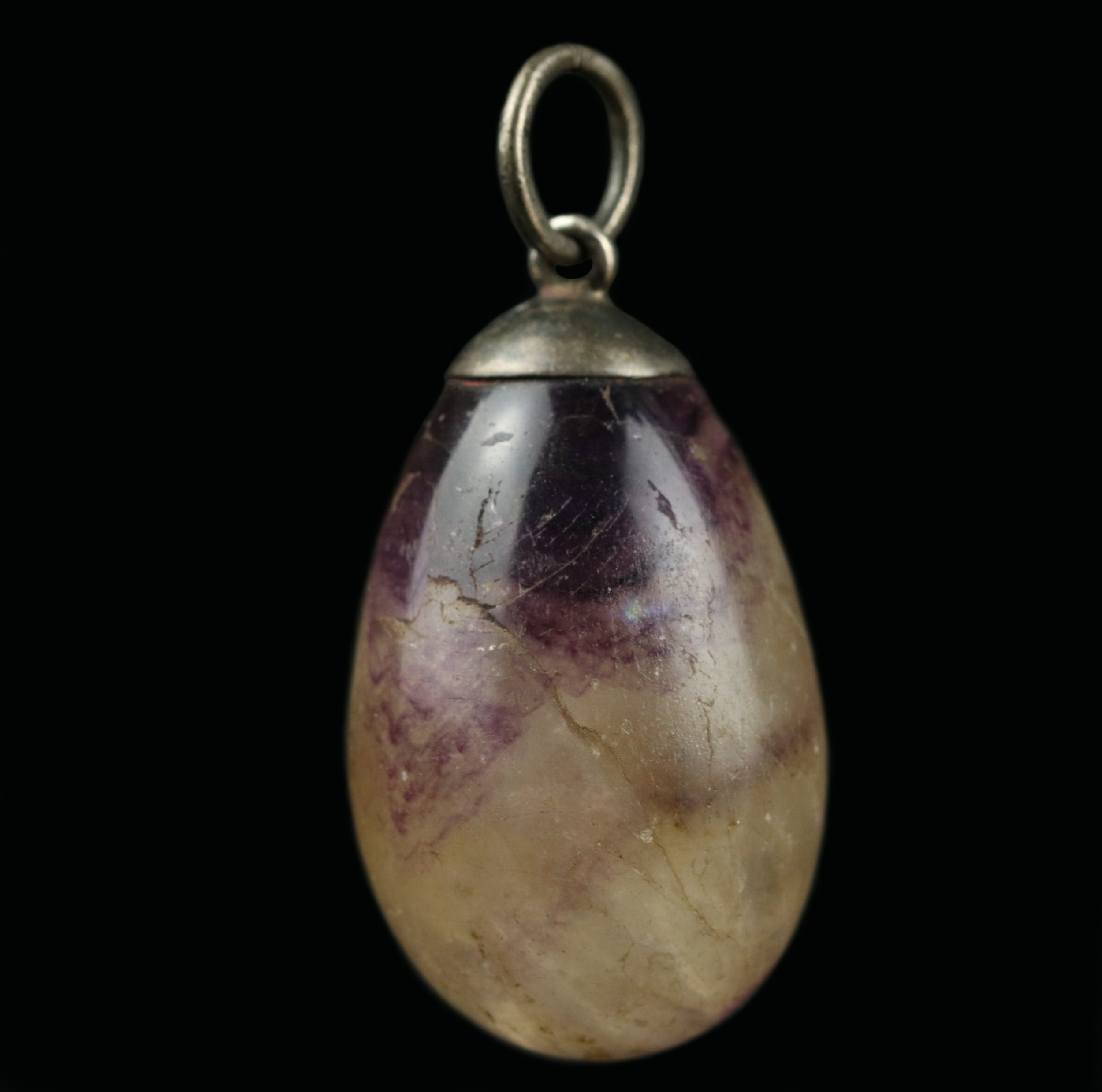
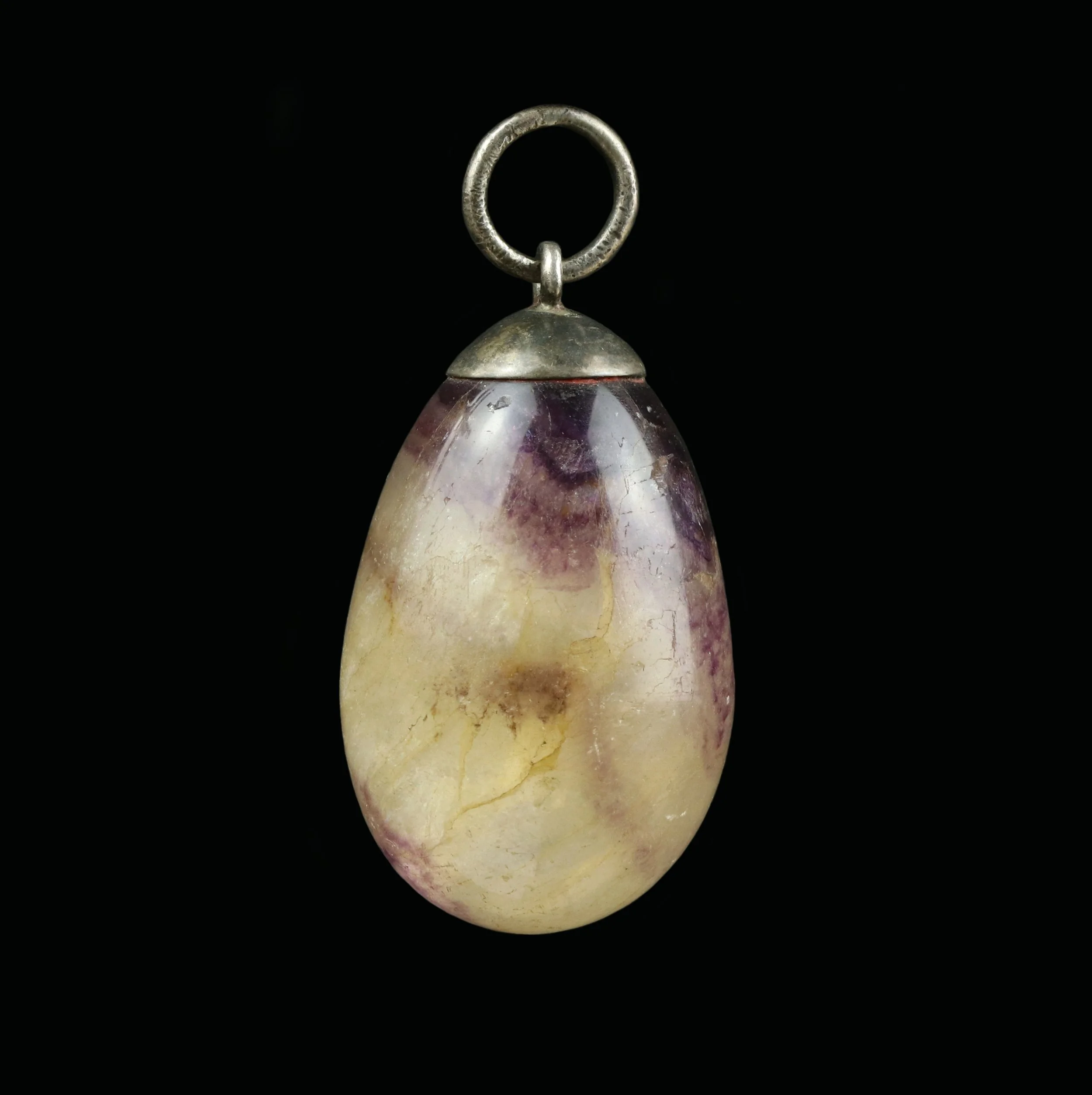
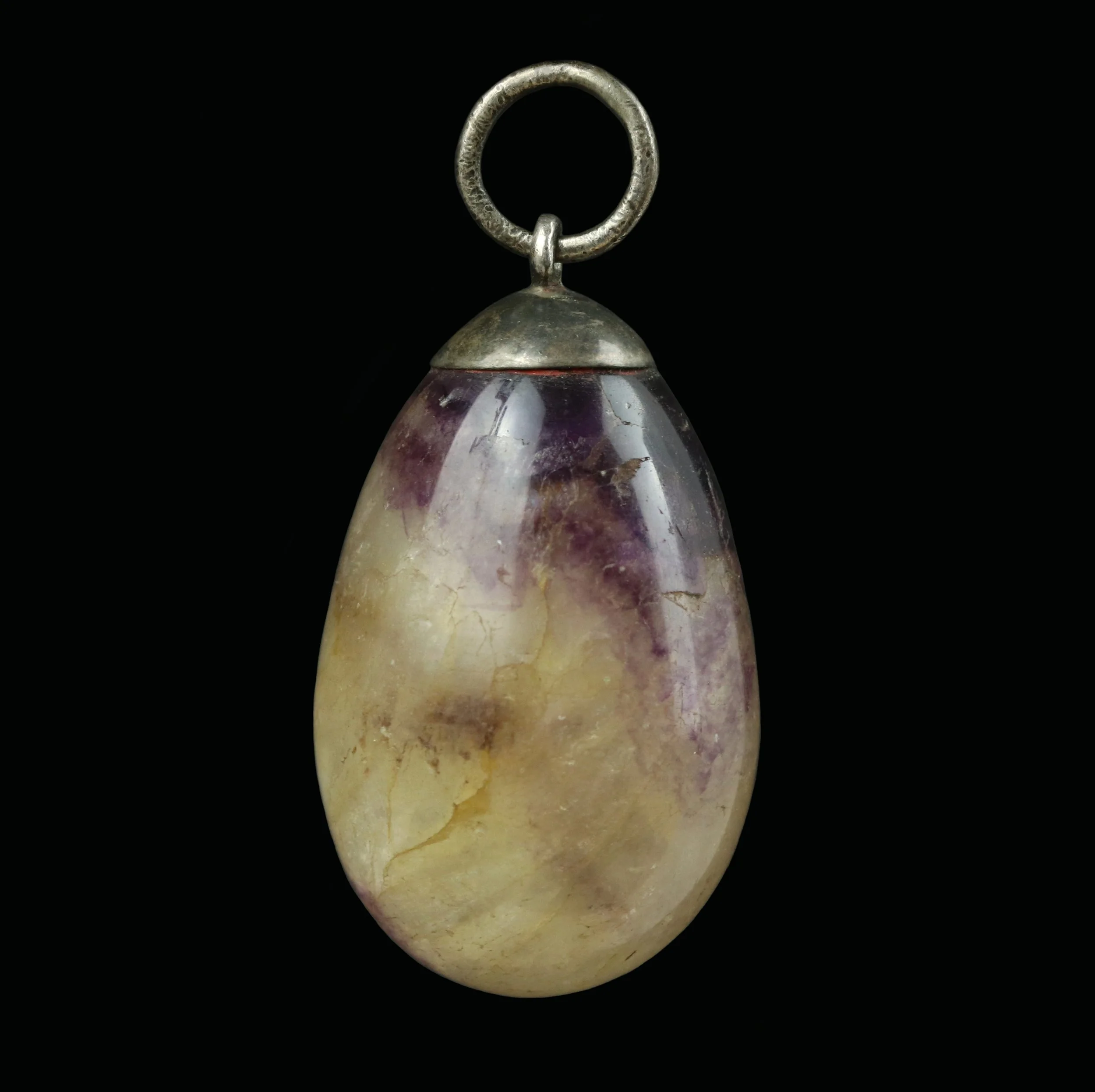
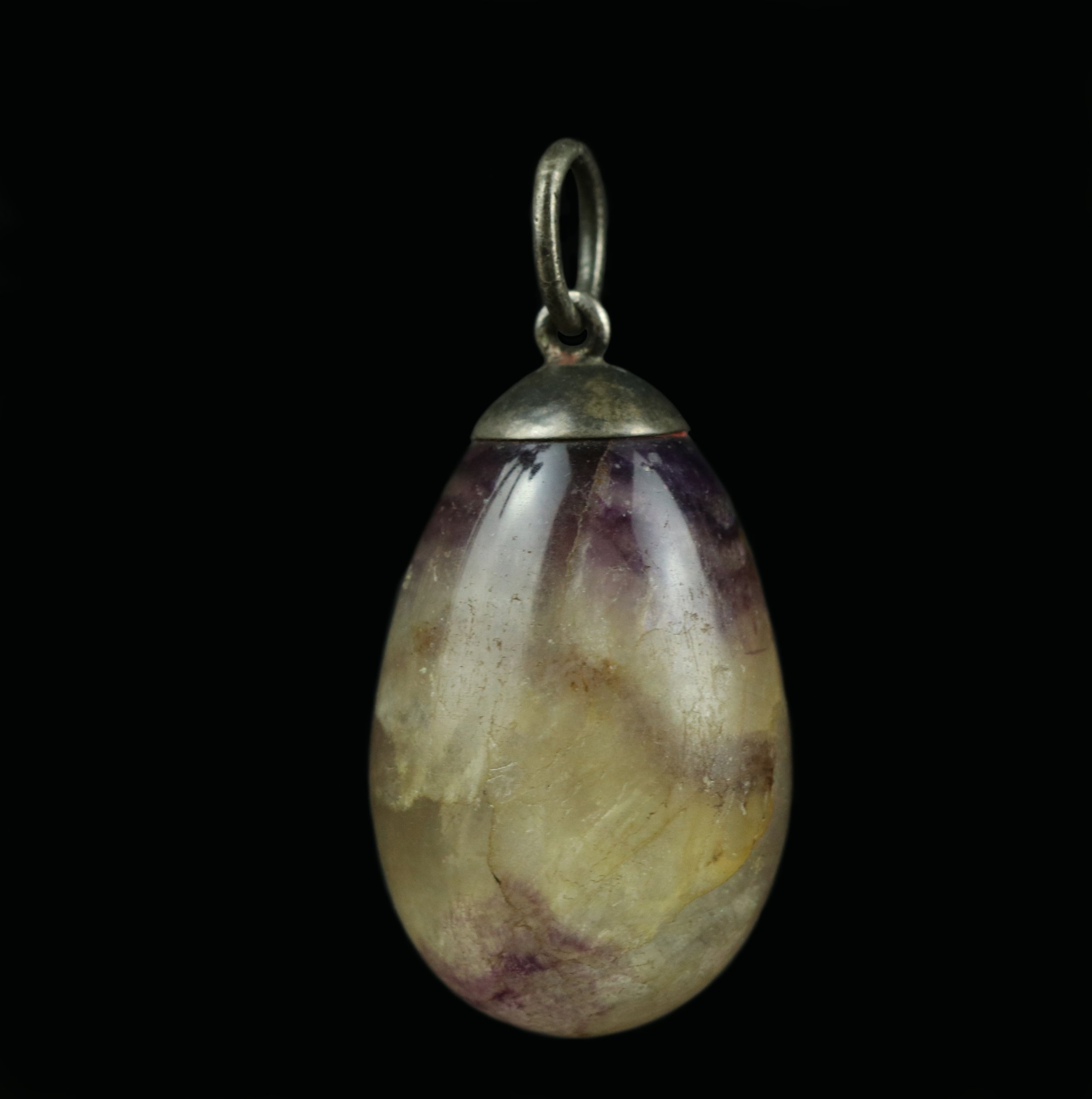
A 19th century, probably Georgian, Blue John egg pendant, with silver cap and suspension loop.
The Blue John displays lovely deep purple colouration toward the mount, with jagged purple veins, to the yellowish body colour, with small areas of iridescence. Blue John is often only found in small pieces, more modern pieces being fused together to form workable pieces, so at a visible 3.5cm long section this is a larger piece for jewellery.
Blue John is a rare form of fluorite found only in one small area, at the Treak Cliff caverns near Castleton, Derbyshire, England. The nomenclature has been lost but a likely theory is that the wording comes from the French for ‘blue’ and ‘yellow’ (bleu jaune) to differentiate the purplish-blue stone mined in the area from the more common black rock.
Blue John has been mined since about 1750 and by the end of the century the finest houses and estates in Britain had stunning ornamental vases, columns and even tables containing the mineral. Since the last century the larger veins have been all but exhausted and although a recent 15th vein has been discovered, only smaller pieces are excavated.
The mines are still active and can be visited for a thrilling experience (not for the claustrophobic!).
The egg is a ubiquitous symbol of life and resurrection. A symbol of luck and wealth and of protecting hidden secrets. And of course, for many centuries the egg has been associated with Easter. The tradition of exchanging eggs at Easter is believed to reach back to the third decade of the first century.
Marks:
Apparently unmarked with regard metal or maker.
Date:
19th century, probably late Georgian.
Length:
5cms.
Condition:
Generally very good. Small marks to the surmount, general noticeable tarnish. Natural surface fissures and small cavities.
By clicking to ‘Purchase’ you agree to having read the Important Information for Purchasers.
Our primary concern is that you are pleased with your purchase. Please feel free to ask as many questions as you like about a product before clicking purchase. We appreciate patina and the ‘age’ that older pieces acquire, because of this we do not polish pieces to strip away the age (though your local jeweller may be willing to do this for you for a small fee). Secondhand, vintage and antique pieces will naturally show scratches and small marks, these will often appear more noticeable in the enlarged images that we have made available for you. Our images are as realistic as they can be. Although any appreciable defects/damages will be mentioned please do inspect the images as they do form a part of the condition report.
Antique items may longer not be suitable for everyday wear or may benefit from thoughtful consideration when worn with care.
A 19th century, probably Georgian, Blue John egg pendant, with silver cap and suspension loop.
The Blue John displays lovely deep purple colouration toward the mount, with jagged purple veins, to the yellowish body colour, with small areas of iridescence. Blue John is often only found in small pieces, more modern pieces being fused together to form workable pieces, so at a visible 3.5cm long section this is a larger piece for jewellery.
Blue John is a rare form of fluorite found only in one small area, at the Treak Cliff caverns near Castleton, Derbyshire, England. The nomenclature has been lost but a likely theory is that the wording comes from the French for ‘blue’ and ‘yellow’ (bleu jaune) to differentiate the purplish-blue stone mined in the area from the more common black rock.
Blue John has been mined since about 1750 and by the end of the century the finest houses and estates in Britain had stunning ornamental vases, columns and even tables containing the mineral. Since the last century the larger veins have been all but exhausted and although a recent 15th vein has been discovered, only smaller pieces are excavated.
The mines are still active and can be visited for a thrilling experience (not for the claustrophobic!).
The egg is a ubiquitous symbol of life and resurrection. A symbol of luck and wealth and of protecting hidden secrets. And of course, for many centuries the egg has been associated with Easter. The tradition of exchanging eggs at Easter is believed to reach back to the third decade of the first century.
Marks:
Apparently unmarked with regard metal or maker.
Date:
19th century, probably late Georgian.
Length:
5cms.
Condition:
Generally very good. Small marks to the surmount, general noticeable tarnish. Natural surface fissures and small cavities.
By clicking to ‘Purchase’ you agree to having read the Important Information for Purchasers.
Our primary concern is that you are pleased with your purchase. Please feel free to ask as many questions as you like about a product before clicking purchase. We appreciate patina and the ‘age’ that older pieces acquire, because of this we do not polish pieces to strip away the age (though your local jeweller may be willing to do this for you for a small fee). Secondhand, vintage and antique pieces will naturally show scratches and small marks, these will often appear more noticeable in the enlarged images that we have made available for you. Our images are as realistic as they can be. Although any appreciable defects/damages will be mentioned please do inspect the images as they do form a part of the condition report.
Antique items may longer not be suitable for everyday wear or may benefit from thoughtful consideration when worn with care.